CASE: Solar panels on a crowded flat roof without roof penetrations
Most flat roof mounting systems are designed for the same roof: large, open and empty, where long rows run uninterrupted from one end to the other. That is the easy case, but it is not the roof that many buildings actually have.
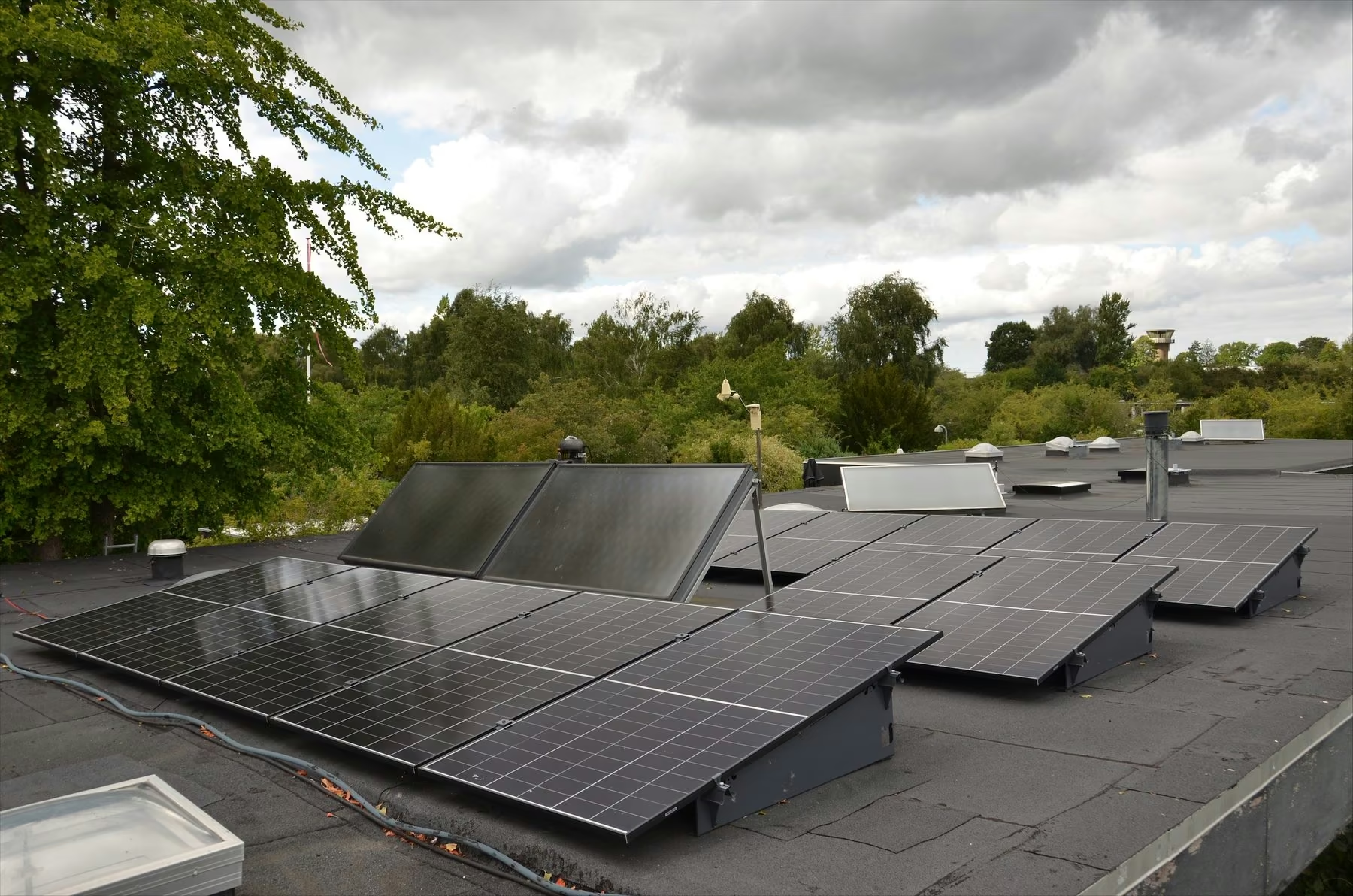
This installation in Denmark is the other kind. The roof is small and it was already close to full. Solar thermal collectors, ventilation pipes and other equipment took up much of the surface area, leaving an irregular patchwork of free space in between.
Why long rails do not fit a crowded roof
Jan Dohrmann of JDC compared several flat roof mounting systems before choosing RAULI FLAT.
I chose the RAULI FLAT system for my solar installation because my roof is quite challenging. There are already solar thermal collectors, ventilation pipes and other obstacles, so making the best possible use of the available space was very important to me.
The situation is a familiar one on smaller commercial and residential flat roofs. Equipment on the roof commonly breaks up the surface and the usable area shrinks quickly, which sets its own demands on the design work.
What I particularly like about RAULI FLAT is its small footprint and flexibility. Many of the other systems I looked at seemed to be designed for large, open roof areas where long rails can be installed. With RAULI, the rails can be adapted in length without cutting, which made it possible to fit the installation around the existing obstacles and use the available roof space efficiently.
With RAULI FLAT the panels can be mounted in portrait orientation, which fits more panels into every row. Telescopic rails adjust to the length the site requires. Nothing has to be cut on the roof, there are no offcuts to carry back down, and short rail runs work just as well as long ones.
The layout is designed in RAULI APP, which calculates the attachment spacing and the component list for the site. The dimensioning is done before anyone climbs onto the roof.
Mounting without penetrating the roof membrane
The second reason for the choice had nothing to do with layout.
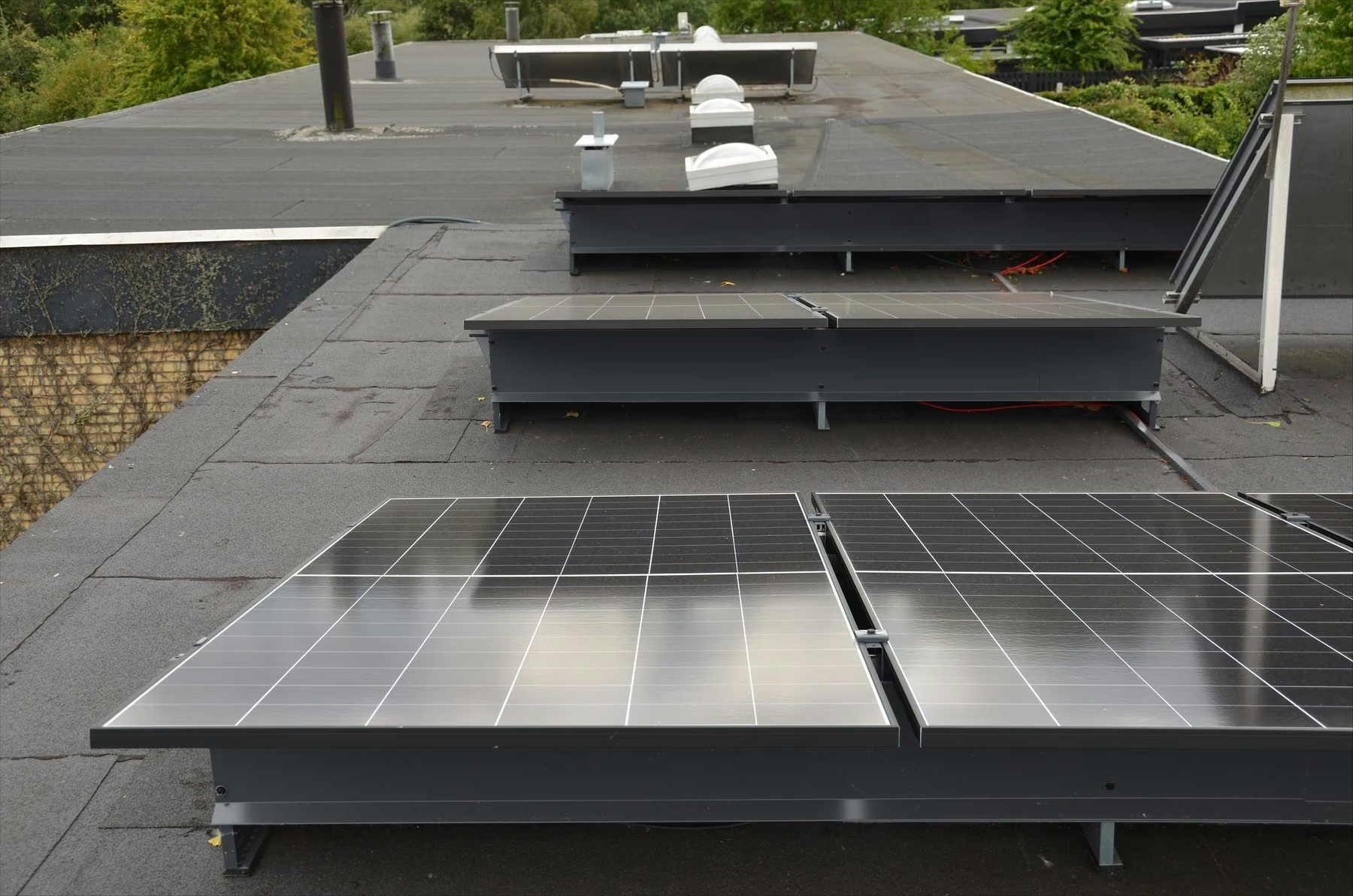
Another important consideration for me was protecting the roofing membrane. The RAULI FLAT system could be installed without penetrating the membrane. This means no additional holes in an already watertight roof and, importantly, no new paths for water to enter through the mounting points. That gives me confidence in the installation for the long term.
What to choose for a small flat roof
For a smaller and more complicated roof like mine, RAULI FLAT turned out to be a very practical solution. It gave me the flexibility to create the layout I wanted while keeping the roof membrane intact. I am very pleased with the result.
Summary
Small and crowded flat roofs are not edge cases. They are a large part of the building stock.
- Panels mounted in portrait orientation. When equipment already takes up much of the surface area, every available square metre has to be used. Portrait mounting fits more panels into each row.
- Adjustable length beats cutting. Telescopic rails fit the space that exists, without waste or improvisation on the roof.
- Every penetration is a future risk. When the mounting does not go through the membrane, a watertight roof stays watertight.







.png)