Spring Storm Blew a Solar Panels Off the Roof
The fierce spring storm that swept across Finland over the weekend brought wind and snow. On the coast, gusts reached 20–26 m/s, and even inland, the wind intensified up to 20 m/s. Power grid operators warned of extensive power outages on the west coast, in Ostrobothnia, and in Northeastern Finland. For us in the Nordics, such weather phenomena are not rare exceptions; they are our operating environment.
However, the spring storm was followed by bad news: the wind had brought solar panels down from a roof. We had to read similar news after last year's autumn storms. With a single solar panel weighing 25–30 kg, anyone can deduce the kind of hazardous situation that arises when elements like this fall from heights.
What does wind do to a solar panel system?
Wind exerts massive uplift and shear forces on every attachment point of a solar panel system. On a flat roof, a strong gust of wind can try to tear the panel off its base in milliseconds.
Challenge
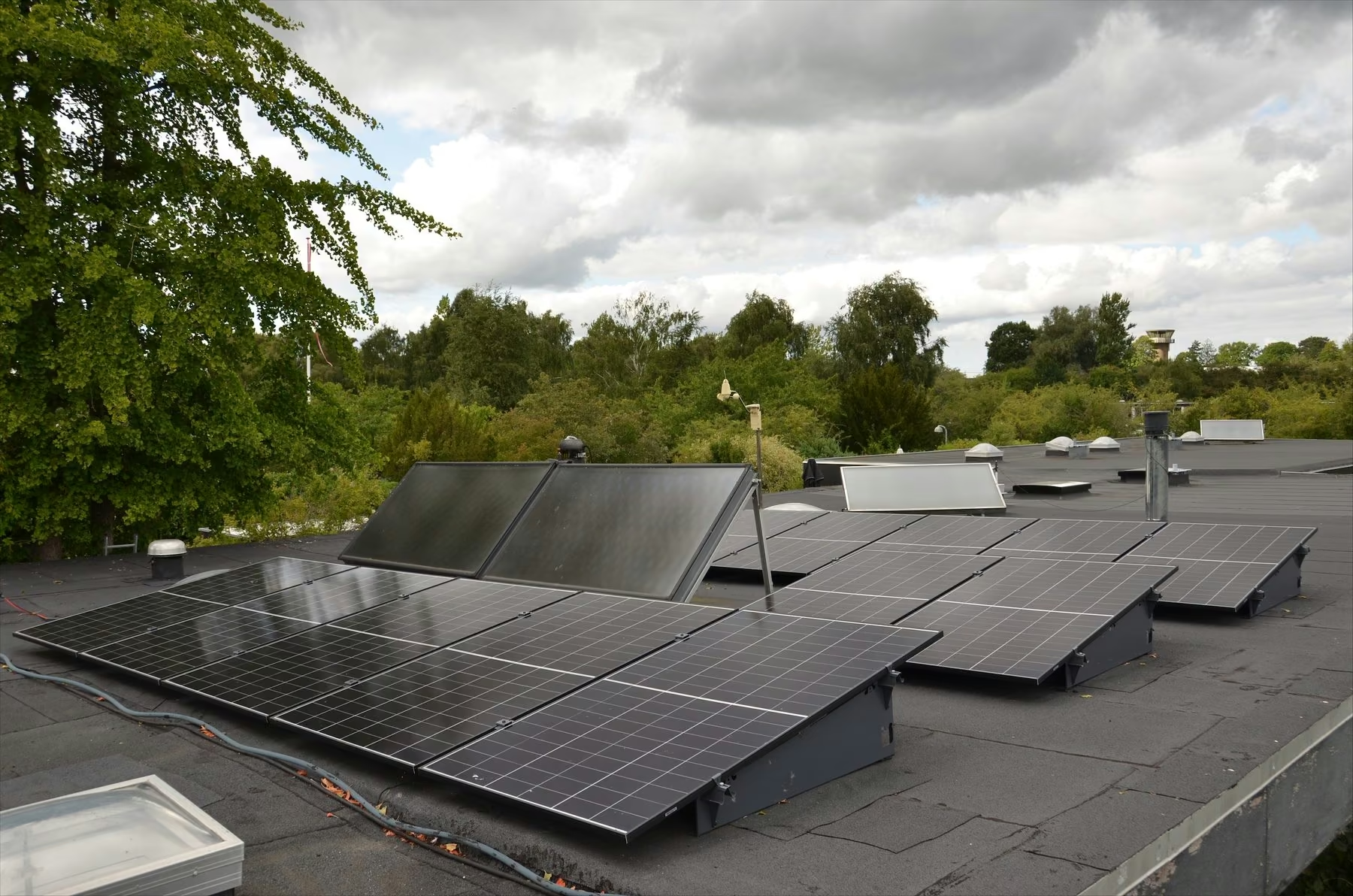
The most essential thing is how the solar panel system is attached to the roof surface, and whether the attachment is strong enough. The most traditional and currently most common method is to use ballast weights, which are stacked onto the system as a counterweight to prevent wind uplift. The sufficient amount of kilograms can be calculated precisely for every area of the solar power plant, but the combined weight of the ballasts often becomes a problem. With a large enough tonnage, the panels can certainly be kept attached to the roof surface, but then we are faced with the next problem: can the roof withstand it? In Finland, roof structures are dimensioned to withstand regional snow loads, which in the Nordic countries can be extremely high in places. When thousands of kilograms of concrete weights are added to the equation, the endurance limit of the roof structures begins to be reached.
Earlier this year, another problem was reported in the news. When ballast weights are added on top of the mounting racks, the point load exerted on the roof surface by the system becomes really high, and this causes problems for the roof. In the worst case, water pooling or even damage to the roof surface can cause major problems from a moisture management perspective.
Solution
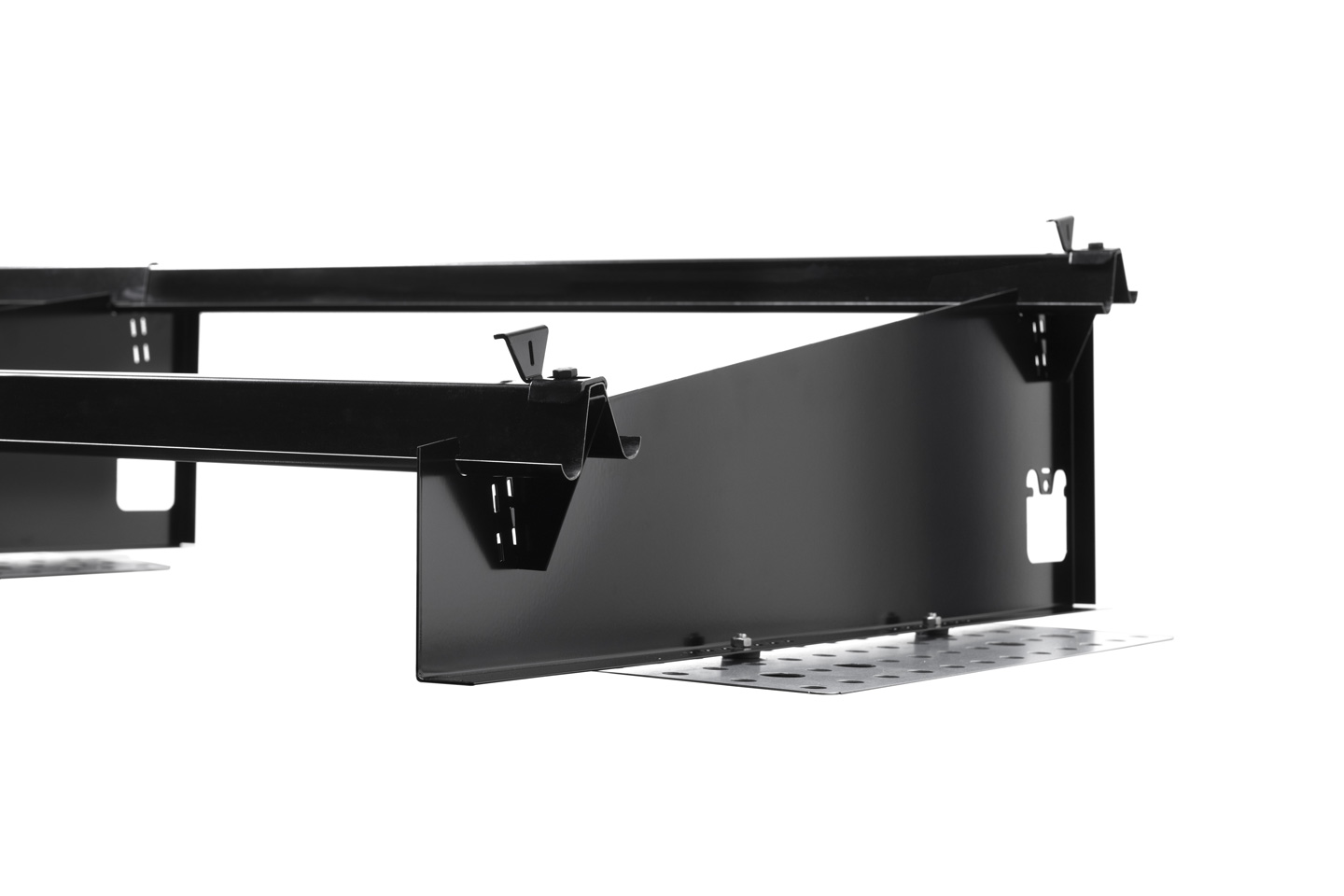
When we developed the RAULI FLAT flat roof system, one of the cornerstones of the design was to minimize the stress exerted on the roof surface. Ballast weights were immediately ruled out. The RAULI FLAT system cannot be implemented with weights.
Instead, the attachment to the roof surface is done by heat welding. This does not require penetrating the roof surface; rather, a durable attachment point is welded to the roof, to which the actual solar panel system is attached. RAULI FLAT has been tested to withstand a wind load of up to 3.5 kN/m². Thanks to the innovative EasyClick rail system, the number of base plates (= attachment points) installed on the roof can be increased or decreased depending on the conditions. The system can withstand a static load of up to 10 kN by adjusting the number of rails and the attachment spacing.
RAULI FLAT systems are designed using the RAULI APP calculator, which provides the correct attachment spacing for every project and calculates a sufficient number of components.
KING OF THE NORTH
Why do northern conditions define our standards? A bracket designed for Central European wind profiles is not enough in Baltic Sea coastal storms or under thick snow. Wet snow, freezing, and unpredictable gusts stress structures in an entirely different way.
When a system is designed and tested to withstand these unforgiving extreme conditions of the North, it is an overwhelmingly superior and safe choice everywhere else as well.
As proof of this, we grant the BLACK, FLAT, and WALL systems a market-leading 30-year warranty.
RAULI: trusted by professionals, chosen by installers.






.png)